Force-Free Training Tips for Cats: Yes, You Really Can Train Your Cat
Cats are smart, food-motivated and very trainable when you work with their nature. A gentle, reward-based guide to teaching your cat useful skills and tricks.
By PetNetUK ·
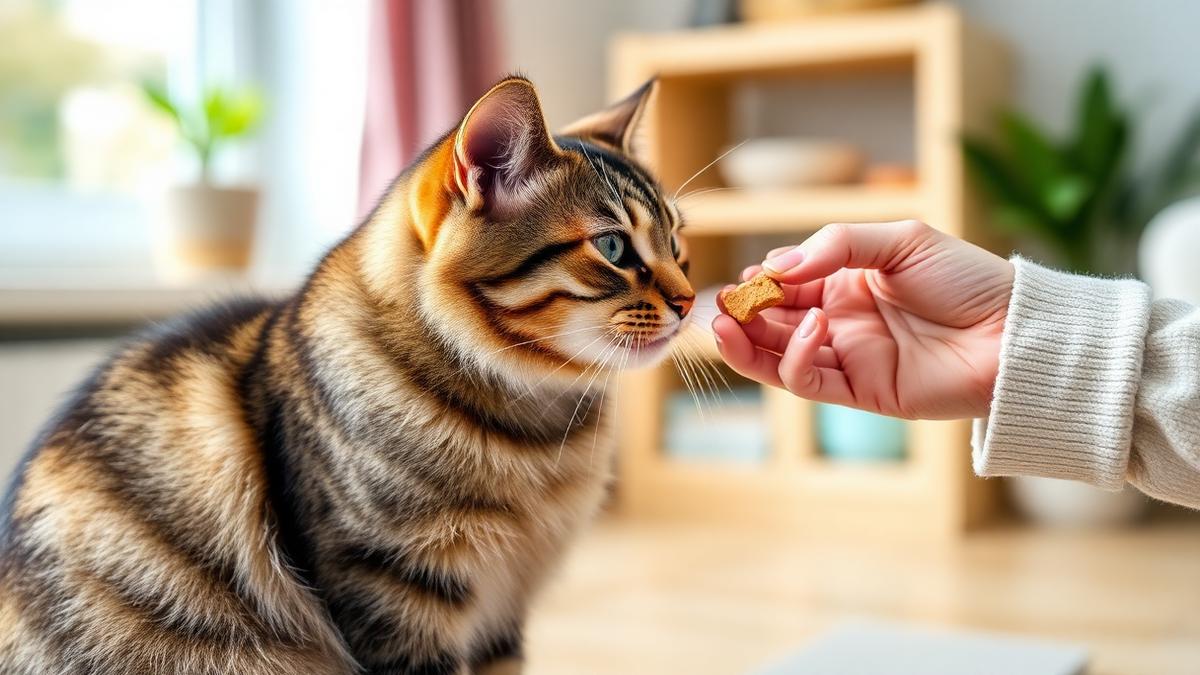
Many people still believe cats cannot be trained. They absolutely can. Cats are intelligent, curious and highly food-motivated, they just do not work for approval the way dogs often do. Force-free training (positive reinforcement) is the only sensible approach for cats: punishment damages trust, increases stress-related behaviours like spraying and over-grooming, and rarely changes the underlying behaviour.
Here is how to train your cat the kind way, recommended by organisations such as International Cat Care and Cats Protection.
Why Force-Free Is the Only Way With Cats
Cats do not have a hierarchical relationship with humans the way dogs do. Squirting water, shouting or scruffing an adult cat does not teach them anything useful, it simply teaches them that you are unpredictable and a bit scary. A frightened cat is more likely to hide, lash out or develop medical issues linked to chronic stress.
Reward-based training, on the other hand, taps into your cat''s natural problem-solving brain and strengthens your bond.
1. Find Your Cat''s Currency
Most cats will work for tiny pieces of cooked chicken, prawn, tuna, lickable treats or freeze-dried meat toppers. Some cats prefer play with a wand toy, a chin scratch or access to a window perch. Test a few options and use whatever your cat lights up for.
Keep food rewards tiny (the size of a grain of rice) so you can do lots of repetitions without overfeeding.
2. Use a Clicker or Marker Word
Clicker training works beautifully with cats. The click is a clear, consistent signal that means "yes, that is the behaviour, a treat is coming." To "charge" the clicker, click and immediately give a treat, ten to fifteen times in a row, over a couple of sessions. Once your cat looks at you expectantly when they hear the click, you are ready to start.
If you prefer not to use a clicker, a short, cheerful word like "yes" works just as well.
3. Start With Easy Wins
Pick behaviours your cat already offers naturally:
- Target: hold a chopstick or your finger near your cat''s nose, click and treat when they touch it. This single skill underpins almost everything else.
- Sit: lure with a treat moved slowly up and back over their head.
- Come when called: pair their name with a treat, then add distance.
- High five or paw: capture or shape any paw lift.
- Into the carrier: toss treats inside, click and reward for stepping in, gradually build duration.
Keep sessions to one or two minutes. Cats have shorter training attention spans than dogs and tend to walk off when they are done, which is fine.
4. Train Husbandry Behaviours
This is where force-free training really pays off. Teaching your cat to voluntarily accept handling makes vet visits, grooming and medication far less stressful for everyone.
- Carrier training: leave the carrier out year-round with a soft blanket and the occasional treat inside.
- Brushing: pair the brush with treats, start with one stroke, build up slowly.
- Nail trims: reward your cat for letting you touch each paw, then for holding a paw briefly, then for one nail at a time.
- Pill or syringe practice: use empty syringes filled with squeezy treat paste so the experience is positive.
If your cat backs away or tenses, you have gone too fast. Stop, take a break and start again at an easier step.
5. Manage the Environment Instead of Punishing
If your cat scratches the sofa, the answer is not a spray bottle, it is a tall, sturdy scratching post placed right next to the sofa, reward them with a treat or catnip every time they use it. If they jump on the kitchen counter, provide a tall cat tree nearby and make the counter boring (clear food away, cover briefly with foil or a plastic carpet runner spike-side up if needed). Then reward them generously for choosing the cat tree.
For litter tray issues, always rule out medical causes first with your vet, then look at tray location, type of litter, cleanliness and the number of trays (the rule of thumb is one per cat plus one).
6. Respect Cat Body Language
Watch for early signs your cat needs a break:
- Tail flicking or thumping
- Ears rotating sideways or flattening
- Skin twitching along the back
- Dilated pupils
- Walking away
End the session before your cat reaches that point. Always train with a "no" option, your cat should be free to leave at any time. That choice is what makes the training feel safe and keeps them coming back for more.
7. Enrichment Is Training Too
A bored indoor cat is far more likely to develop problem behaviours. Rotate puzzle feeders, food balls, snuffle mats, cardboard boxes and wand toys. Aim for at least two short play sessions a day, ending with a small meal so your cat can hunt, catch, kill and eat in the natural sequence.
8. When to Get Help
If your cat is showing signs of stress (urinating outside the tray, over-grooming, hiding for long periods, sudden aggression), please see your vet first to rule out pain or illness, then ask for a referral to an ABTC-registered Clinical Animal Behaviourist or a member of the APBC or ICatCare Advanced Feline Behaviour course alumni. Avoid anyone offering "dominance" based advice for cats, it has no scientific basis.
Final Thought
Training your cat is not about making them perform. It is about giving them choices, building their confidence and making everyday life (vet visits, nail trims, grooming, travel) far less stressful. Five minutes a day of force-free training can transform your relationship with your cat and unlock a side of them you may never have seen.
Looking for cat-friendly professionals near you? Browse the PetNetUK directory for groomers, sitters and behaviourists who work with cats the kind way.